If you run a restaurant or food business in Northeast Texas, you already know grease shows up everywhere. The real question is how to prevent it from clogging your plumbing or triggering a visit from the city. A grease trap prevents fats, oils, and grease from entering your drains, allowing your business to run more efficiently when it functions properly.
In this guide, we’ll walk through what a grease trap is and how often it needs service in Texas.
At a Glance
- A grease trap keeps fats, oils, and grease (FOG) out of your drains and the city sewer.
- Most Northeast Texas kitchens need grease trap cleaning every 1–3 months.
- Many cities follow the 25% rule, which requires pumping when grease and solids reach one-quarter of the trap’s depth.
- Regular service protects your plumbing, prevents shutdowns, and keeps you compliant.
What Is a Grease Trap and Why Does It Matter For Your Business
A grease trap is a box-shaped device that sits in your wastewater line. Hot, greasy water from your sinks and dishwashers moves through it, slows down, and cools. As the water cools:
- Grease floats.
- Solids settle.
- Cleaner water exits to the sewer.
This simple process protects your lines and helps the city avoid blockages.
Restaurants, cafeterias, food trucks with prep sinks, commercial kitchens, and grocery stores with delis all need a grease trap under Texas regulations. Cities across Northeast Texas enforce this because FOG causes sewer backups that affect entire neighborhoods.
Why Northeast Texas Businesses Need to Stay Ahead
In areas like Bonham and Sherman, backups and blockages create more than plumbing trouble. They can trigger:
- Health department warnings.
- Plumbing emergencies.
- Bad smells that drift into customer areas.
- Inspection failures.
- Temporary closures.
Most owners don’t risk any of that. They just want a clear schedule and someone who knows how local rules work.
How Grease Traps Work in a Restaurant Kitchen
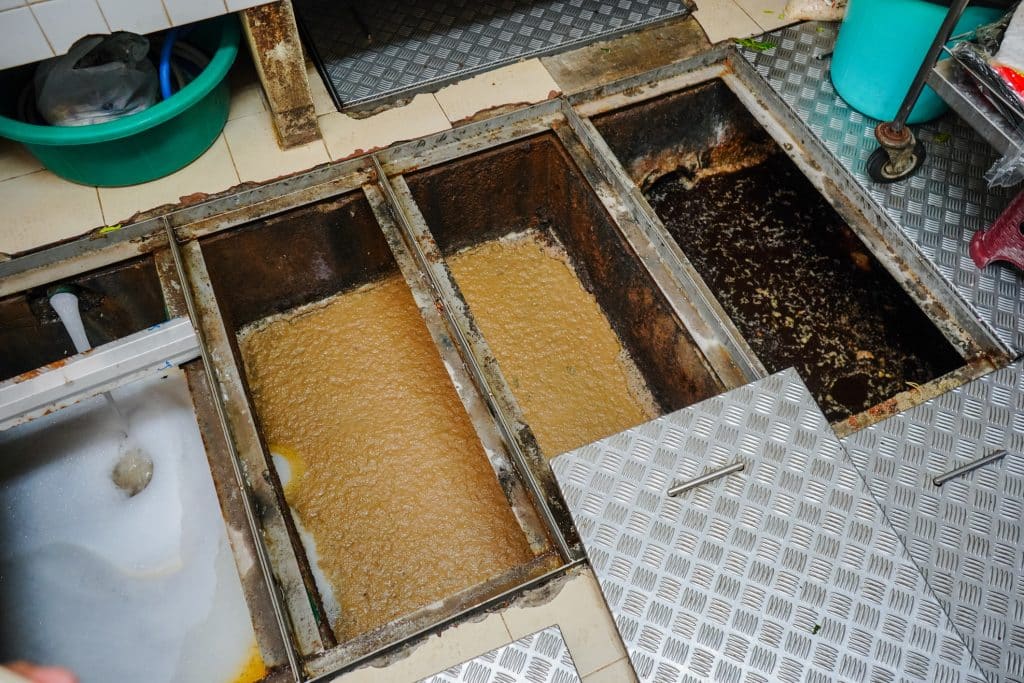
Grease traps handle several tasks at once. They slow down incoming water, give grease time to rise, let solids fall, and send cleaner water out. When the trap has too much buildup, it stops separating anything and sends grease straight into your pipes.
You’ll notice problems quickly:
- Slow drains.
- Water backing up.
- Gurgling sounds in the sink.
- Strong odors near the trap or floor drains.
These early signs usually show up before a full backup hits, so catching them matters.
How Flow and Temperature Affect Performance
Grease cools and hardens as soon as it sits. High-volume kitchens that run multiple fryers or rely on sauté and grill stations push more grease into the trap. That’s why restaurants in Texas with heavy lunch and dinner traffic often need more frequent pumping.
Texas Grease Trap Rules Small Business Owners Should Know
Texas doesn’t issue a single statewide schedule for grease trap pumping, but most cities use similar rules based on TCEQ (Texas Commission on Environmental Quality) guidance.
The 25% Rule
Many Northeast Texas cities use the 25% rule. When the combined layer of grease and solids equals 25% of the trap’s depth, the trap must be pumped. Past that point, the trap can’t do its job.
Common 90-Day Standard
A lot of cities require restaurants to clean their traps every 90 days. Some allow longer intervals if a business shows that the trap stays under the 25% mark for a longer period.
Bonham’s Requirements
Since Dusty Underwood Plumbing & Septic serves the Bonham area daily, here’s what the city expects:
- Full cleaning at least every 180 days.
- Earlier cleaning if the trap reaches the 25% threshold.
- Accurate records of pump-outs for inspections.
Some restaurants reach the 25% mark much faster, especially those with heavy frying or high food volume. That’s why regular service helps businesses avoid surprises.
How Often You Should Clean a Grease Trap
Most Northeast Texas restaurants need grease trap cleaning every 1–3 months. The exact schedule depends on a few things:
Menu Type
- BBQ, Tex-Mex, fried foods, and comfort-food kitchens produce more grease.
- Bakeries and cafés produce less but still need routine cleaning.
Trap Size
Smaller traps fill faster and often require monthly cleaning.
Business Volume
Busy weekends, game-day crowds, or catering work can overload a trap.
Local Rules
If your city has a 90-day pumping standard, staying under that limit helps avoid fines.
A quick inspection from Dusty Underwood can give your kitchen a clear baseline and help you choose the right service interval.
What Professional Grease Trap Cleaning Includes
A real grease trap cleaning goes beyond removing the top layer of grease. That kind of partial service won’t meet code and won’t help your plumbing.
Dusty Underwood Plumbing & Septic takes a full-service approach, which includes:
- Pumping out grease, oils, and solids
- Inspecting baffles, lids, and inlet/outlet pipes
- Removing hardened buildup
- Hydrojetting when needed
- Washing the interior of the trap
- Cleaning the surrounding area
- Documenting the service for inspection records
Hydrojetting makes a big difference because it removes buildup inside the lines around the trap, not just the trap itself. This helps stop recurring clogs.
Grease Traps FAQs & TIPS
Do all restaurants in Texas need a grease trap?
Yes. Any business that prepares or serves food must install and maintain one under local FOG rules.
Can I clean a grease trap myself?
You can’t meet inspection standards with DIY cleaning. Cities expect licensed professionals to pump, clean, and document service.
What size grease trap should my restaurant have?
Size depends on your fixtures, flow rate, and kitchen layout. A licensed plumber can evaluate your needs and recommend the right setup.
What This Means for Your Business
Staying ahead of your grease trap keeps your kitchen running smoothly, protects your plumbing, and gives you confidence during local inspections. When you understand how the trap works and how often to clean it, you avoid emergencies and keep your staff focused on serving customers.
Get Reliable Grease Trap Service in Northeast Texas
If your grease trap hasn’t been cleaned in a while or you’re noticing slow drains and odors, now’s the time to schedule service. Dusty Underwood Plumbing & Septic assists restaurants and small businesses in Bonham and Northeast Texas with grease trap cleaning, inspections, and maintenance, ensuring kitchens remain open and operational without stress.
Schedule your grease trap service today and keep your plumbing running smoothly.